UK State Pension Explained: What You'll Actually Get
How qualifying National Insurance years work, how gaps impact self-employed professionals, and the actual payouts for the current UK tax year.

The UK State Pension forms the foundation of retirement income for millions of people. Yet many workers—particularly the self-employed, freelancers and company directors—are unsure how entitlement is calculated, how gaps in their National Insurance record arise, or how much they are likely to receive. Understanding the system can help you identify missing qualifying years, improve your future entitlement where possible, and estimate your guaranteed retirement income.
1. The New State Pension vs. The Old System
The system was majorly overhauled in April 2016.
- The New State Pension: Applies to men born on or after 6 April 1951, and women born on or after 6 April 1953. You can verify your eligibility date using the State Pension age checker on GOV.UK.
- Current Full Amount (2026/27): The full New State Pension is £241.30 per week, which equals £12,547.60 per year (commonly rounded to £12,548).
- How it increases: Under the "Triple Lock" rule, the State Pension increases each year by whichever is the highest of: inflation, average wage growth, or 2.5%.
2. The National Insurance (NI) Connection
You do not get the State Pension automatically just by living or working in the UK. It is entirely determined by your National Insurance (NI) record.
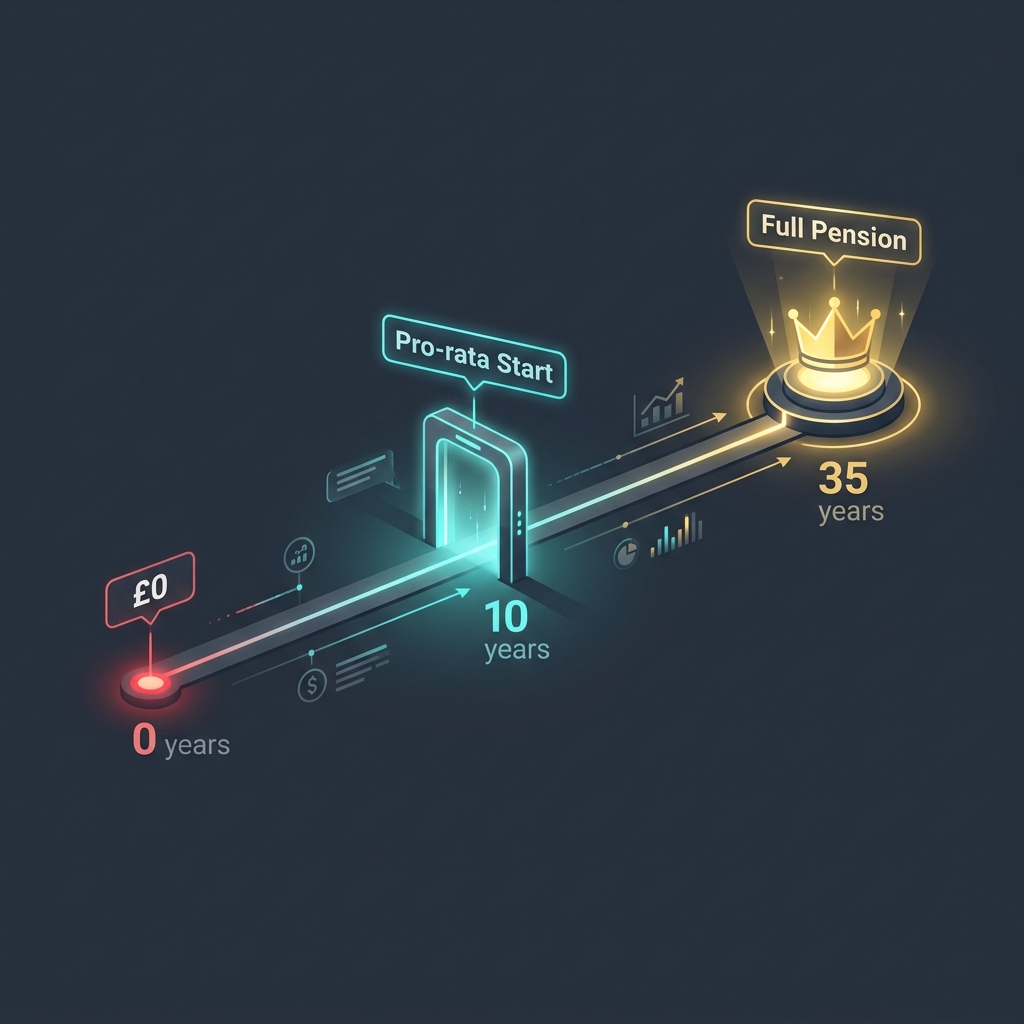
- Minimum to get anything: You need at least 10 qualifying years on your NI record to get any portion of the State Pension. If you have 9 years or less, you get £0.
- To get the full amount: Most people need 35 qualifying years for the full New State Pension, although transitional rules mean some people need more or fewer.
- Pro-rata calculations: If you have between 10 and 35 years, you receive a proportional amount. For example, if you have 20 qualifying years, you get 20/35ths of the full rate (approx. £138 per week) for someone whose pension is calculated entirely under the New State Pension rules.
3. The Freelancer & Sole Trader Trap
For employees, National Insurance is deducted automatically from their pay packets by their employer. But for freelancers, sole traders, and directors of small limited companies, gaps can easily emerge:
- Low Earnings: If your profits are low, you may still receive National Insurance credits automatically, but some years may not become qualifying years depending on your circumstances. It's worth checking your NI record regularly.
- Dividends over Salary: If you run a Limited Company and pay yourself entirely in dividends without paying yourself a salary above the relevant National Insurance threshold, you won't be building up NI credits.
- Working Abroad: Years spent working outside the UK do not build UK NI records unless you apply to pay voluntary contributions or qualify through certain social security agreements.
How to check your record
You can check your State Pension forecast on GOV.UK by logging into your personal tax account.
4. How to Plug Gaps in Your Record
If you check your record and discover you don't have enough qualifying years, you can often pay voluntary Class 3 NI contributions on GOV.UK to buy back missing years.
- The 6-year rule: Normally, you can only pay voluntary contributions to plug gaps in the previous 6 tax years.
- Is it worth it? For most people, buying back missing years can be a high-returning financial decision. Although voluntary Class 3 contributions can cost several hundred pounds per year purchased, each year purchased adds approximately £358 a year to your State Pension for life (based on 2026/27 rates). For many people, the cost can be recovered after only a few years of receiving the higher State Pension, making voluntary contributions good value—but it depends on your circumstances.
Calculate Your True Shortfall
Use our custom retirement calculator to plug in your exact age, current savings pot, monthly targets, and pension forecasts to see your true, achievable path.
Go to Retirement Calculator